Navigating the Web Development Landscape: Trends and Best Practices in HTML, React, Angular, Laravel, and PHP
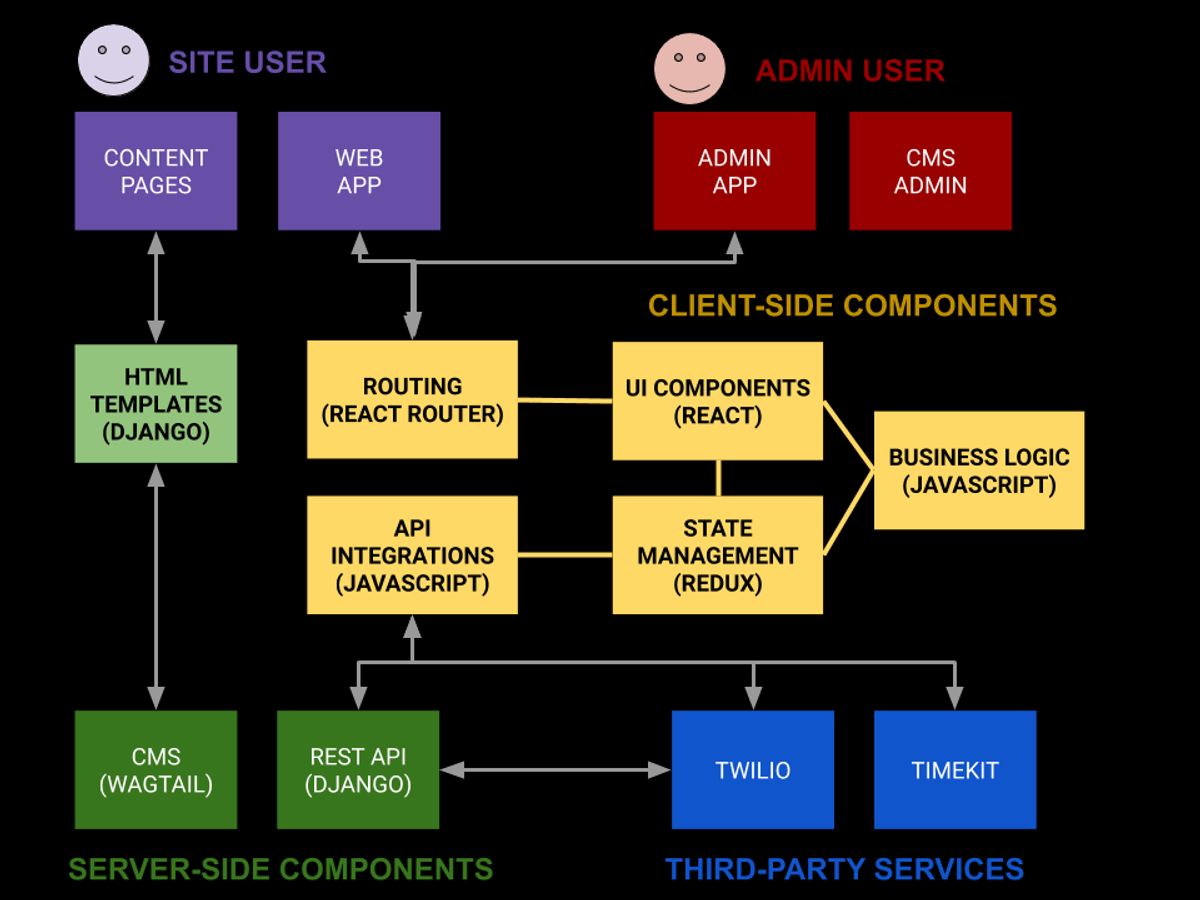
The web development landscape is a vast and ever-evolving field, with new trends and best practices constantly emerging. In this article, we will navigate through the intricacies of web development, focusing on the role and advancements of HTML, and the comparative strengths and considerations of frontend frameworks like React and Angular. We'll also delve into server-side development with Laravel and PHP, and explore the criteria for choosing the right JavaScript framework for your project. Additionally, we will provide an overview of the top web development platforms, discussing their features and the shifts in the industry.
Key Takeaways
- HTML continues to evolve, with HTML5 solidifying its place as the modern standard, emphasizing accessibility, semantic markup, and responsive design.
- React and Angular dominate the frontend framework scene, each with unique features like component-based architecture and two-way data binding, respectively.
- Backend development is equally critical, with PHP best practices and Laravel's elegance leading the server-side programming domain.
- Choosing the right JavaScript framework involves considering factors like community support, performance, scalability, and the rise of Node.js and serverless architectures.
- The web development platform landscape is diverse, with WordPress, Shopify, and new contenders like static site generators and headless systems shaping the future.
The Evolution and Future of HTML in Web Development

HTML5: The Modern Standard
HTML5 has revolutionized the way we build the web, becoming the modern standard that defines the structure and presentation of content across the globe. It is the cornerstone of client-side web development, ensuring that web pages are not only functional but also engaging and accessible to all users.
With HTML5, developers have a robust set of semantic elements at their disposal, allowing for clearer code and better accessibility. These elements include <article>, <section>, <nav>, and <footer>, each serving a distinct purpose in the document structure.
Embracing HTML5 means committing to a web that is more inclusive, interactive, and adaptable to the diverse needs of users worldwide.
HTML5 also introduces APIs for advanced features such as offline support, drag-and-drop, and direct audio and video embedding. This has significantly reduced the reliance on third-party plugins, streamlining the user experience.
As we look to the future, HTML5 continues to evolve, guided by the principle of universal access. Its ongoing development promises even greater capabilities, ensuring that web professionals stay at the forefront of technology. Don't miss out on harnessing the full potential of HTML5 in your projects. Stay informed, stay ahead, and most importantly, stay engaged with the ever-changing landscape of web development.
Accessibility and Semantic Markup
In the realm of web development, accessibility and semantic markup are not mere buzzwords but essential components of a truly inclusive digital space. By adhering to Web Content Accessibility Guidelines (WCAG), developers can ensure that their websites are navigable and usable by people with a wide range of disabilities. This commitment to inclusivity not only broadens your audience but also reflects a deeper understanding of user needs.
Embracing accessibility is a testament to a developer's dedication to user experience and social responsibility.
Consider the following points when implementing accessibility and semantic markup:
- Use HTML5 semantic elements to convey meaning and structure.
- Ensure that all interactive elements are keyboard accessible.
- Provide alternative text for images to support screen readers.
- Maintain sufficient color contrast to aid users with visual impairments.
AI-driven automation in software development is set to revolutionize the way we approach these tasks, enhancing efficiency and quality. By integrating AI principles, developers can streamline the implementation of accessibility features, ensuring that the web remains an open platform for all. As we look to the future, innovation in this area promises to further empower developers and improve software outcomes.
Integrating Multimedia and Responsive Design
In the realm of next-generation web development, the integration of multimedia elements and responsive design is not just a trend, but a fundamental shift in how we create and interact with websites. Innovative web technologies have paved the way for advanced web design techniques that ensure a seamless user experience across a multitude of devices.
Responsive Web Design Innovations have revolutionized the way we think about web user interfaces. The use of flexible grids, fluid images, and media queries allows websites to adapt to any screen size, from desktop monitors to smartphones. This adaptability is crucial in our mobile-first world, where the majority of users access the internet via mobile devices.
Embrace the web development future outlook by adopting responsive web design innovations that cater to the evolving needs of users.
To truly enhance web user experience innovations, one must consider not only the visual and interactive aspects but also the performance implications. Websites must load quickly and run smoothly to keep users engaged. Here's a concise list of practices to ensure your website meets these standards:
- Optimize image and video files to reduce load times.
- Implement lazy loading for media elements that are not immediately visible.
- Utilize responsive design frameworks like Bootstrap or Foundation.
- Incorporate accessibility features following WCAG guidelines.
Remember, the goal is to create addictive content that resonates with your audience. By integrating multimedia with responsive design, you can craft experiences that are both visually stunning and functionally robust. Explore categories like graphics, programming, and digital marketing on platforms like Fiverr Pro to find professionals who can help you achieve this. Join the Fiverr community for business solutions and support, and take the first step towards a future-proof web presence.
React and Angular: Comparing Frontend Frameworks

The Rise of Single Page Applications (SPAs)
In the realm of modern web application frameworks, the emergence of Single Page Applications (SPAs) has revolutionized user experiences online. SPAs have become synonymous with fluidity and responsiveness, offering a seamless interaction as users navigate through content without the traditional page reloads of Multi-Page Applications (MPAs).
Progressive Web App Development further elevates the SPA paradigm by delivering mobile-app-like experiences within the browser, blurring the lines between web and native applications. This synergy of web performance and mobile convenience has set a new benchmark for what users expect from digital interactions.
- User Experience: Instantaneous feedback and interaction.
- Performance: Reduced server load and faster transitions.
- Development: Streamlined process with modern tools and libraries.
The adoption of SPAs is not just a trend; it's a strategic move towards more engaging and performant web applications that cater to the evolving demands of users.
As developers and businesses alike navigate the web development landscape, the choice to invest in SPAs and Progressive Web App Development is a testament to their commitment to excellence and innovation. Embrace the future of web applications by considering how SPAs can transform your digital presence. Don't let your projects lag behind—stay ahead of the curve and captivate your audience with cutting-edge technology.
Component-Based Architecture in React
React's component-based architecture is a game-changer in the realm of web development. Components are the building blocks of any React application, encapsulating their own logic and state, which leads to better code organization and reusability. This modular approach not only simplifies the development process but also enhances the maintainability of complex applications.
The beauty of React's components lies in their ability to be nested, composed, and reused across different parts of an application, creating a cohesive and scalable system.
React also shines when it comes to state management. With solutions like the Context API and Redux, developers can manage application state with precision and efficiency. Here's a quick look at the benefits of using React's component-based architecture:
- Modularity: Each component is a self-contained unit, making it easier to debug and test.
- Reusability: Components can be reused across different parts of the application, saving time and effort.
- Scalability: As the application grows, components make it manageable to maintain and update the codebase.
Embrace the power of React and its component-based architecture to elevate your web development projects. The shift towards this paradigm is not just a trend; it's a best practice that empowers developers to build robust, high-performance applications. Don't miss out on the opportunity to streamline your development process—dive into React and witness the transformation of your web applications.
Two-Way Data Binding in Angular
Angular's two-way data binding is a game-changer for developers, ensuring a seamless synchronization between the model and the view. This powerful feature means that any changes in the model are instantly reflected in the view, and vice versa, without the need for manual DOM manipulation. It's a cornerstone of Angular's approach to web development, simplifying the process and reducing the potential for errors.
The modularity of Angular is another aspect that cannot be overstated. By promoting a modular architecture through components, modules, and services, Angular not only facilitates code organization but also enhances reusability. This structure is pivotal for maintaining large-scale applications and allows for a more collaborative and efficient development environment.
Angular's dependency injection system is a testament to its commitment to code maintainability and testability. By enabling loose coupling between components, it paves the way for a more modular and manageable codebase.
Furthermore, Angular's CLI tools are indispensable for developers, offering a suite of commands for scaffolding, testing, and deployment that streamline development workflows. These tools are a testament to Angular's dedication to improving the developer experience and accelerating the development process.
Stas Sorokin, a seasoned web developer, offers expertise in using Open AI GPT4 for web applications. Services include AI-powered applications, consultations, and integrations with various technologies. As you navigate the intricate web development landscape, remember that the right tools and frameworks can make all the difference. Angular, with its robust features and community support, stands as a beacon for developers seeking to build dynamic and scalable web applications.
Performance and Scalability Considerations
In the realm of web development, performance and scalability are pivotal factors that can make or break the success of an application. As developers, we must architect solutions that not only meet current demands but also anticipate future growth. This foresight involves implementing strategies such as load balancing, caching, and database optimization to ensure that applications remain robust under the strain of increased traffic.
Scalability is not an afterthought; it's a foundational aspect of modern web development that demands our attention from the outset.
Efficiency in project delivery hinges on our ability to optimize for performance. Techniques like minimizing file sizes, leveraging caching mechanisms, and utilizing content delivery networks (CDNs) are essential for fast loading times and smooth user experiences. Here's a concise checklist to guide you:
- Assess whether the application needs to handle a high volume of users or data.
- Implement load balancing to distribute traffic evenly across servers.
- Utilize caching to reduce database load and improve response times.
- Optimize database queries for efficiency and speed.
- Consider content delivery networks (CDNs) to minimize latency.
Remember, the choice of framework can significantly impact both performance and scalability. It's crucial to analyze performance benchmarks and assess the framework's ability to scale before making a decision. Security, while a separate concern, is also intertwined with these considerations, as a scalable system must also be secure. As you navigate the complex web development landscape, keep these best practices at the forefront of your strategy. Engage with us further to explore how these considerations can be tailored to your specific project needs.
Server-Side Development: Laravel and PHP

Modern PHP: Best Practices and Object-Oriented Programming
In the realm of web development, PHP has stood the test of time, evolving into a language that embodies Web Development Best Practices. The modern PHP developer must navigate a landscape where object-oriented programming (OOP) is not just a preference but a necessity for creating maintainable and scalable applications.
Embracing OOP principles in PHP leads to code that is not only elegant but also robust and reusable. This paradigm shift has been instrumental in PHP's resurgence as a preferred server-side language.
PHP's versatility is showcased through its compatibility with various operating systems, including Windows, Linux, macOS, and Unix. Its syntax, reminiscent of C and Perl, offers a gentle learning curve while opening doors to powerful web development capabilities. Here's a glimpse into the PHP toolbox:
- Dynamic HTML generation
- Data processing capabilities
- Extensive database interaction
- Versatile platform support
Laravel, a PHP framework, exemplifies modern practices with features like ORM, simple routing, and straightforward authentication. It's a toolkit that accelerates development while adhering to best practices. As we continue to push the boundaries of what's possible with PHP, remember that the journey towards mastery is ongoing. Stay curious, stay engaged, and let's build the web of tomorrow, today.
Laravel: Elegance and Simplicity in PHP Frameworks
In the realm of web development, Laravel stands out as a beacon of elegance and simplicity, offering a rich set of functionalities that streamline the creation of web applications. Its expressive syntax and robust features like ORM, routing, and authentication are designed to enhance productivity and foster an environment of efficient creativity.
Laravel's open-source nature not only democratizes web development but also encourages a vibrant community contribution, leading to a framework that is constantly evolving to meet the needs of developers. The framework's scalability has been a topic of debate; however, for small to medium-sized projects, Laravel's benefits are undeniable.
Laravel's philosophy is to make web development enjoyable and creative, without sacrificing application functionality.
Here's a quick glance at the pros and cons of using Laravel:
- Pros:
- Open-source with a large community
- Elegant syntax that saves time
- Built-in features for common web tasks
- Cons:
- May require additional considerations for large-scale projects
By harnessing Laravel's capabilities, developers can unlock business potential with AI-powered analytics, leading to personalized recommendations, operational excellence, and a sustainable competitive advantage. As you continue to navigate the web development landscape, consider how Laravel can be the artisan's toolkit for your next project.
Security and Authentication in Web Applications
In the digital age, security is the cornerstone of user trust in web applications. Safeguarding user data is not just a technical requirement; it's a commitment to your users' privacy and safety. Robust security measures, such as encryption and secure communication protocols, are imperative to protect personal details, payment information, and login credentials from unauthorized access.
User authentication is a critical aspect of web security. It ensures secure access and personalized experiences. Managing user accounts and login functionality, while employing secure APIs for data exchange, fortifies the application against unauthorized use.
Cyber attacks like XSS, CSRF, and SQL injection pose serious threats to web applications. Developers must employ best practices such as input validation, output encoding, and session management to mitigate these risks. Remember, a breach in security can compromise not just data but also the integrity of your application.
If you're seeking to enhance your web application's security or need expert guidance, consider our web development consultation services. With vast experience in technologies like Angular, React, and NodeJS, our Pro freelancers can help you resolve tech issues and elevate your security measures to the next level.
Database Interactions and ORM Usage
In the realm of server-side development, the ability to efficiently manage and interact with databases is paramount. Proficiency in database management systems (DBMS) such as MySQL, PostgreSQL, or MongoDB is not just a skill but a necessity for web developers. These systems serve as the backbone for storing, retrieving, and manipulating data within web applications.
Understanding SQL (Structured Query Language) is the cornerstone of database interactions. However, the advent of Object-Relational Mapping (ORM) tools like Sequelize or Hibernate has revolutionized how developers work with databases. ORMs provide an abstracted, high-level API for database interactions, allowing developers to write database queries using the programming language they are working with, rather than SQL.
The choice of database system and ORM can significantly impact the performance and scalability of a web application. It is crucial to consider the specific requirements of your project when selecting these tools.
Here is a comparison of some popular databases:
| Database | Type | Known For |
|---|---|---|
| MySQL | Relational | Large-scale databases, user-friendly interface |
| PostgreSQL | Relational | Advanced features, open-source |
| MongoDB | NoSQL | Flexibility, scalability |
Remember, the right database and ORM can make or break your application's success. Stay informed, choose wisely, and never stop learning. If you're eager to delve deeper into the intricacies of database interactions and ORM usage, join our community of passionate developers and share your experiences.
Choosing the Right JavaScript Framework for Your Project
Criteria for Selecting a JavaScript Framework
When embarking on the journey of selecting a JavaScript framework, developers are often met with a plethora of choices, each boasting unique features and benefits. The key is to align the framework's capabilities with the project's specific needs.
- Performance: How well does the framework handle complex applications?
- Community Support: Is there a robust community for troubleshooting and knowledge sharing?
- Learning Curve: How steep is the learning process for new developers?
- Ecosystem: Are there enough resources, libraries, and tools available?
- Compatibility: Does the framework play well with other technologies you're using?
The decision should not be taken lightly, as the chosen framework can significantly impact both the development process and the final product's success.
Remember, the goal is not just to choose a framework, but to choose the right partner for your digital creation. As you weigh your options, consider the long-term implications of your choice on maintainability and scalability. Engage with us in the comments below to share your experiences or reach out for a deeper discussion on finding the perfect fit for your project.
The Impact of Node.js on Backend Development
The advent of Node.js has revolutionized backend development, offering a JavaScript runtime environment that is both powerful and efficient. Node.js excels in handling asynchronous operations, making it a prime choice for applications requiring real-time capabilities, such as chat applications and online gaming platforms.
- Node.js with Express.js: A robust combination for rapid development and HTTP request handling.
- Scalability: Node.js is renowned for managing numerous concurrent connections effortlessly.
- Community and Modules: A vast ecosystem of libraries and modules to extend functionality.
Node.js, paired with Express.js, has become a staple in the creation of RESTful APIs and server-side applications. Its simplicity and small size are pivotal in projects where performance is a key concern. As we delve into the backend frameworks, it's clear that Node.js stands out for its modular approach, which accelerates development and allows developers to concentrate on crafting dynamic features that enhance user experiences.
Embracing Node.js in your tech stack can be a transformative step towards building scalable, efficient, and modern web applications.
As we navigate the ever-evolving web development landscape, it's crucial to stay informed and adapt to new technologies. Node.js has proven to be a game-changer, and its impact on backend development cannot be overstated. To ensure your projects remain at the forefront of innovation, consider integrating Node.js into your development strategy. It's not just about keeping up with trends; it's about harnessing the power of modern technology to drive growth and success.
Emerging Trends: Serverless Architectures and Microservices
The web development landscape is continuously evolving, and serverless architectures and microservices are at the forefront of this transformation. These paradigms are reshaping how developers think about infrastructure and application design, offering unparalleled flexibility and efficiency.
Serverless computing allows developers to focus on their code, as the cloud provider manages the execution environment. This means less overhead and a significant reduction in operational costs. Microservices, on the other hand, enable the development of applications as a suite of small, independent services, each running its own process and communicating through lightweight mechanisms.
- Scalability: Effortlessly handle varying loads
- Resilience: Isolated services reduce failure impact
- Modularity: Easier to understand, develop, and test
- Agility: Quicker deployments and updates
Embracing these trends not only streamlines development but also propels businesses towards more agile and adaptive models. The integration of AI-driven automation and emerging technologies is transforming software development, enhancing business growth, and innovating SaaS through strategic implementation for efficiency and scalability.
As we look to the future, the incorporation of predictive analytics and quantum computing will further revolutionize the field, offering predictive insights and unprecedented computational power. The rise of Web 3.0, with its decentralized applications and finance, promises to redefine security and interoperability in the digital economy.
Stay ahead of the curve by integrating these emerging trends into your development strategy. The journey towards a more efficient, scalable, and innovative web is just beginning, and the opportunities for growth are limitless.
The Role of Community and Ecosystem in Framework Success
In the realm of web development, the vitality of a framework's community and ecosystem cannot be overstated. An active community serves as the backbone of any successful framework, providing support, sharing knowledge, and driving innovation. A robust ecosystem, on the other hand, ensures that developers have access to a plethora of plugins, tools, and extensions that can accelerate development and enhance functionality.
When selecting a JavaScript framework for your project, consider the following:
- The size and activity level of the community
- Availability of learning resources and documentation
- Frequency of updates and maintenance
- The diversity of plugins and integrations
The right community can make or break a framework's success. It's not just about the code; it's about the people who write it, maintain it, and push it forward.
Frameworks with strong communities often see a virtuous cycle of growth and improvement. As more developers adopt the framework, more resources become available, which in turn attracts even more developers. This cycle fosters an environment where both newcomers and veterans can thrive.
Remember, the framework you choose will be your partner in the development journey. It's essential to align with a community that resonates with your project's goals and values. Dive into forums, check out online tutorials, and engage with other developers to gauge the pulse of the community. Your due diligence today will pave the way for a smoother development process tomorrow.
Web Development Platforms: An Overview of the Top Contenders

Content Management Systems: WordPress and Beyond
In the realm of web development, Content Management Systems (CMS) have revolutionized the way we create, manage, and publish digital content. WordPress, the titan of CMS platforms, is not just a tool but a canvas for creativity, empowering over 43% of websites on the internet. Its PHP-based architecture offers a seamless experience for both novices and seasoned developers alike.
The allure of WordPress lies in its simplicity and extensibility. With a plethora of themes and more than 58,000 free plugins, the platform caters to a diverse range of needs, from blogging to e-commerce. Here's a quick glance at the pros and cons:
-
Pros:
- Easy installation and site-building tools
- Rich third-party plugin ecosystem
- Free access to numerous themes
- SEO optimization for higher SERP rankings
- Strong, active community support
-
Cons:
- Inconsistent syntax at times
- Potential security vulnerabilities
- Scalability challenges for large-scale applications
While WordPress dominates the CMS landscape, it's crucial to explore beyond. Platforms like .NET MVC, ExpressJS, Laravel, and CodeIgniter offer unique features and cater to specific development needs. Your choice should align with your project's requirements and long-term vision.
Remember, the right CMS can elevate your digital presence and streamline your content strategy. As you consider your options, think about the level of customization you need, the scalability potential, and the community support available. Engage with a platform that not only meets your current needs but also anticipates future trends.
Are you ready to harness the power of a robust CMS? Dive into the world of WordPress and its alternatives to find your perfect match. And if you're seeking top-quality freelancers to assist you, platforms like Fiverr Pro offer expert services with a money-back guarantee. For instance, Stas Sorokin specializes in API integrations, a critical component for seamless CMS functionality.
E-commerce Platforms: Shopify, BigCommerce, and OpenCart
In the bustling arena of e-commerce platforms, choices abound, but Shopify, BigCommerce, and OpenCart stand out for their unique offerings. Shopify excels with its user-friendly interface and extensive customization options, making it a go-to for businesses with large inventories. It's a platform that connects you with millions, fostering business growth. However, it's important to note that costs can escalate, and some users find the blogging experience less than ideal.
BigCommerce offers a robust solution for entrepreneurs seeking a premium hosted service. Its strength lies in the flexibility to sell a wide array of products, coupled with excellent website builder functionality. Accessibility from any web browser means managing your store on the go is a breeze.
OpenCart, the open-source contender, is free and highly adaptable, with a strong store management system. It boasts over 13,000 extensions, allowing for a high degree of customization. Yet, newcomers may face a steep learning curve, and the need for add-ons can be frequent.
AI-driven e-commerce enhances customer engagement with predictive segmentation, tailored recommendations, and dynamic pricing. Dismantling data silos for holistic analysis is crucial for actionable insights and growth.
When selecting an e-commerce platform, consider the following:
- Cost: Evaluate the pricing structure and potential additional expenses.
- Customization: Assess the ability to tailor the platform to your specific needs.
- Support: Determine the level of support and community resources available.
- Scalability: Ensure the platform can grow with your business.
Embrace the future of e-commerce by choosing a platform that aligns with your business goals. Engage with your audience through cutting-edge technology and stay ahead in the digital marketplace.
Static Site Generators and JAMstack Architecture
In the dynamic world of web development, Static Site Generators (SSGs) have emerged as a powerful tool for building fast and secure websites. SSGs pre-render pages at build time, which means that the server can serve static files without the need for a database or server-side processing. This approach not only enhances performance but also significantly reduces security vulnerabilities.
JAMstack architecture takes this concept further by decoupling the frontend from the backend, allowing developers to leverage various microservices for functionalities like search and e-commerce. This architecture promotes a more scalable and maintainable codebase, which is particularly beneficial for projects that anticipate growth.
Here's a quick comparison of popular Static Site Generators:
| SSG | Language | Features |
|---|---|---|
| Jekyll | Ruby | Simple, blog-aware |
| Hugo | Go | Fast build times |
| Gatsby | JavaScript | Rich plugin ecosystem |
| Next.js | JavaScript | Hybrid static & server rendering |
Embrace the simplicity and security of SSGs and JAMstack for your next project. The benefits are clear: faster load times, improved security, and a developer experience that keeps you focused on creating rather than configuring.
As we navigate the ever-evolving landscape of web development, it's crucial to stay informed and adaptable. The rise of SSGs and JAMstack architecture is a testament to the industry's shift towards more efficient, secure, and scalable solutions. Don't get left behind—explore these technologies and consider how they can enhance your web projects. Remember, in the AI era, businesses leverage tools like OpenAI Feather and SIU Business GPT Fleet for a competitive edge. The time to innovate is now.
The Shift Towards Headless and Decoupled Systems
In the realm of Cutting-Edge Web Development Trends, the shift towards headless and decoupled systems marks a significant milestone. These architectures separate the front-end presentation layer from the back-end logic and data handling, offering unparalleled flexibility in Front-End Development Technologies.
Emerging Web Development Tools are empowering developers to create more dynamic, scalable, and personalized user experiences. By decoupling, systems can leverage various back-end services, making Back-End Development Advances more impactful than ever.
Full-Stack Development Insights suggest that full-stack frameworks are increasingly popular, as they streamline the development process by combining the strengths of both front-end and back-end frameworks. Here's a glimpse into the benefits of headless systems:
- Enhanced performance and scalability
- Greater creative freedom for developers
- Easier integration with other services and APIs
- Improved security through isolated components
In the context of Web Development Industry Disruptions, headless and decoupled systems are not just a trend but a strategic approach to building robust digital experiences. As AI-driven analytics revolutionize business operations, these architectures facilitate cost savings, strategic decision-making, and customer engagement for competitive advantage in today's evolving landscape.
Embrace the future of web development by considering headless and decoupled systems for your next project. The agility and adaptability they offer could be the key to staying ahead in a rapidly changing digital world.
As you navigate the myriad of options in web development, remember that the right choice can propel your project to new heights. Engage with the community, stay informed on the latest trends, and make decisions that align with your strategic goals. The future is bright for those who innovate and adapt.
Conclusion
In conclusion, the web development landscape is a complex and ever-evolving domain, where technologies such as HTML, React, Angular, Laravel, and PHP play pivotal roles. Trends indicate a strong preference for frameworks that offer robustness, scalability, and ease of use, with React and Angular leading the front-end development space. Laravel continues to be a preferred choice for PHP developers seeking an elegant and feature-rich MVC framework. Meanwhile, the core language of the web, HTML, remains indispensable, evolving to meet modern demands. Best practices emphasize the importance of understanding the unique strengths and use cases of each technology, ensuring that developers can make informed decisions to craft efficient, maintainable, and high-performing web applications. As the digital landscape grows, staying abreast of these trends and practices is crucial for developers aiming to build cutting-edge solutions that stand the test of time.
Frequently Asked Questions
What are the key features of HTML5 in modern web development?
HTML5 introduces semantic elements, multimedia integration, and supports responsive design, making it the modern standard for structuring and presenting content on the web.
How do React and Angular differ in managing state and data flow?
React uses a unidirectional data flow and manages state within components or using state management libraries. Angular employs two-way data binding, allowing automatic synchronization between the model and the view.
What are the best practices for PHP development?
Best practices for PHP include using object-oriented programming, adhering to the PSR standards, utilizing Composer for dependency management, and implementing proper security measures.
Why is Laravel considered an elegant PHP framework?
Laravel is known for its expressive syntax, ease of use, and features like Eloquent ORM, Blade templating engine, and built-in tools for security, which make it a preferred choice among PHP developers.
When choosing a JavaScript framework, what factors should be considered?
Considerations include the project's requirements, community support, framework performance, learning curve, and the availability of resources and documentation.
What are the advantages of using a headless CMS in web development?
A headless CMS provides greater flexibility, better performance, and the ability to deliver content across multiple platforms without being tied to a specific frontend technology.


Comments
Post a Comment