Navigating the Web of Code: How HTML, React JS, Angular, Laravel, and PHP Shape Modern Web Development
In the ever-evolving landscape of web development, technologies like HTML, React JS, Angular, Laravel, and PHP stand out as cornerstones of modern web applications. This article delves into the intricate web of code that shapes today's digital experiences, exploring the trends, best practices, and diverse development needs catered to by these powerful tools.
Key Takeaways
- HTML remains the foundational language of the web, while frameworks like React JS and Angular offer robust tools for creating dynamic front-end experiences.
- Laravel, with its ORM and MVC architecture, significantly enhances PHP's server-side capabilities, streamlining the development process.
- Modern web development requires a versatile stack; technologies like Node.js and Express enable full-stack JavaScript solutions, integrating seamlessly with front-end frameworks.
- Emerging paradigms such as Svelte and Gatsby represent the future of web development, focusing on simplicity, speed, and integration with modern services.
- Maintaining and scaling web applications is crucial, involving best practices such as cross-browser compatibility, automated testing, and continuous integration for long-term success.
The Pillars of Front-End Development: HTML and Modern Frameworks
Understanding the Role of HTML in Web Development
At the heart of every web page lies HTML, the foundational language that structures content and provides the scaffold upon which styles and behaviors are built. HTML is the blueprint of the web, dictating how text, images, and interactive forms are displayed to users. It's the starting point for anyone aspiring to create digital experiences, from simple static pages to complex web applications.
Frameworks have revolutionized the way developers work with HTML. They offer pre-written code snippets, components, and tools that streamline the development process, allowing for rapid prototyping and production. Here's a quick look at how frameworks enhance HTML's capabilities:
- Templating: Generate dynamic HTML content
- Libraries: Simplify database access and session management
- Code Reuse: Encourage modular design and maintainability
Embracing HTML and its associated frameworks is not just about building websites; it's about crafting experiences that resonate with users, ensuring accessibility, and promoting engagement.
As a web developer specializing in AI-powered applications using GPT-4, it's crucial to understand the interplay between HTML and modern frameworks. Whether you're working with the MERN stack, MEAN, Laravel, Symfony, or Express, a solid grasp of HTML is indispensable. Dive into the world of HTML and frameworks, and watch your web development skills soar. Remember, the web is an ever-evolving canvas, and your ability to navigate its complexities will set you apart.
Comparing React JS, Angular, and Other Front-End Frameworks
In the ever-evolving landscape of web development, choosing the right front-end framework can be as crucial as the foundation for a skyscraper. React JS and Angular stand tall among their peers, each with its own set of strengths and philosophies. React, birthed by Facebook, emphasizes a virtual DOM for high-performance user interfaces, while Angular, Google's brainchild, offers a comprehensive suite of tools for a more opinionated development approach.
Frameworks are more than just tools; they are ecosystems that can define the workflow and capabilities of your projects. Here's a quick rundown of the top contenders:
- Angular: A TypeScript-based framework known for its robust features and enterprise-level applications.
- React: Favored for its component-based architecture and extensive community support.
- Vue.js: A progressive framework that is gaining traction for its simplicity and approachability.
Choosing the right framework is a strategic decision that can influence project success, developer productivity, and long-term maintenance.
While React's popularity has soared, as evidenced by its widespread adoption and a Stack Overflow survey crowning it the most used front-end framework, Angular's comprehensive approach continues to be a staple in professional web development. Vue.js, on the other hand, is making waves with its blend of Angular's structure and React's simplicity. The decision between these frameworks often boils down to project requirements, team expertise, and community support.
Are you ready to elevate your web development skills to new heights? Dive into the world of front-end frameworks and discover how they can transform your projects. Don't miss out on the opportunity to enhance your digital presence with professional web development consultation services offered by experts like Stas Sorokin. Your next web application could be a testament to the power of the right framework.
Best Practices for Creating Efficient Front-End Designs
In the realm of Advanced Web Design Techniques, the pursuit of excellence is unending. As architects of the digital landscape, we must embrace the latest Responsive Web Design Innovations to ensure our creations are not only visually stunning but also universally accessible. The key to mastering Web Development Best Practices lies in understanding the delicate balance between aesthetics and functionality.
Embracing simplicity in design does not equate to a lack of creativity; rather, it paves the way for clarity and ease of use, which are paramount in user experience.
Front-End Development Technologies are evolving at a breakneck pace, and keeping abreast of these changes is crucial. Here's a distilled list of best practices:
- Prioritize mobile-first design to cater to the growing number of mobile users.
- Employ a responsive grid system to ensure seamless display across devices.
- Optimize loading times with efficient coding and image compression.
- Focus on user experience (UX) by making navigation intuitive and information readily accessible.
- Keep the interface (UI) clean and uncluttered, highlighting the most important content.
Remember, the web is an ever-changing ecosystem, and your willingness to adapt and learn can set you apart. Dive into the world of Front-End Development Technologies and emerge with solutions that not only meet but exceed user expectations. Let's continue to weave the web of innovation together—your next project could be the benchmark for the future of web development.
Server-Side Technologies: PHP and Laravel's Contribution to Web Development
The Evolution and Current State of PHP in Web Development
PHP, a cornerstone of server-side scripting, has undergone significant transformation since its inception. From a simple scripting language, it has evolved into a robust platform powering a vast majority of web applications. The continuous refinement of PHP is a testament to its resilience and adaptability in the ever-changing landscape of web development.
Frameworks like Laravel have further elevated PHP's capabilities, offering elegant syntax and powerful tools for developers. CakePHP, another long-standing framework, emphasizes convention over configuration, streamlining the development process. Meanwhile, PHP's integration with various front-end technologies continues to be a critical factor in its widespread use.
The integration of PHP with modern front-end technologies ensures a seamless user experience and a more efficient development workflow.
As we look to the future, PHP's role in web development remains significant. With the integration of AI tools, PHP frameworks are poised to offer enhanced decision accuracy and agility in market responsiveness. This strategic growth and innovation are crucial for businesses aiming to stay ahead in a competitive digital environment.
Here's a glimpse at the PHP ecosystem:
- Laravel: A framework that has revolutionized PHP development with its elegant syntax and comprehensive feature set.
- CakePHP: Known for its simplicity and security, it's a go-to for both large and small projects.
- Symfony, Zend, Laminas, Mezzio: Other notable PHP frameworks that contribute to the robustness of the language.
PHP's journey is far from over. As developers, we must continue to harness its potential, integrating the latest advancements to create dynamic, scalable web applications. Embrace the power of PHP and join the community that's shaping the future of the web. Dive into the code, and let's innovate together!
Laravel's Features and Its Impact on Development Efficiency
Laravel, with its expressive, elegant syntax, has revolutionized the way developers approach web development. It simplifies everyday tasks such as authentication, routing, sessions, and caching, making it a beloved tool among developers for creating maintainable PHP applications. The framework's ORM, Eloquent, allows for database interactions using simple PHP syntax, eliminating the need for complex SQL queries.
Key Features of Laravel:
- Inbuilt ORM (Eloquent) for simplified database queries
- MVC architecture support for streamlined development
- Innovative template engine for dynamic website creation
- Database-agnostic migrations and schema builder to keep teams in sync
Laravel's ecosystem provides a suite of tools that enhance productivity and foster creativity, making it a top choice for both small and medium-sized projects.
However, it's important to note that while Laravel is a time-saver and easy to use, it may face challenges in scalability and functionality for very large, complex projects. Despite this, the open-source nature of Laravel invites a community of developers to continually contribute to its growth and capabilities.
If you're intrigued by the potential of Laravel to elevate your web development projects, explore its repository and join the community of over 71.3K stars on GitHub. Embrace the efficiency Laravel offers and watch as your development process transforms.
Integrating Laravel with Front-End Technologies
In the realm of web development, Laravel stands out as a beacon of productivity, offering a rich set of functionalities that streamline the integration with front-end technologies. Its ORM, Eloquent, allows developers to interact with databases using expressive PHP syntax, bypassing the need for complex SQL. The MVC architecture inherent in Laravel ensures a separation of concerns, facilitating a smoother development process when working alongside front-end frameworks such as React.js, Vue.js, or Angular.
Laravel's template engine, Blade, is another gem that seamlessly blends with HTML and JavaScript, enabling the creation of dynamic content with ease. Here's a glimpse into how Laravel harmonizes with various front-end technologies:
- HTML5/CSS3: Utilizes Blade for templating, allowing for the injection of PHP code directly into HTML.
- JavaScript Frameworks: Offers compatibility with Vue.js, React.js, and Angular, among others, for rich interactive user interfaces.
- CSS Preprocessors: Integrates with tools like SASS for advanced styling capabilities.
Embracing Laravel in your tech stack means adopting a tool that not only enhances backend efficiency but also acts as a bridge to the front-end universe, ensuring a cohesive and maintainable codebase.
As you consider Laravel for your next project, remember that its elegance and expressiveness are not just about writing less code—it's about writing meaningful code that resonates with both developers and users alike. Dive into the Laravel ecosystem and experience the synergy it brings to your web development endeavors. Don't just take our word for it; explore the Laravel GitHub repository and join the community of developers who are shaping the future of web applications.
Building Dynamic Web Applications with JavaScript and Backend Frameworks
JavaScript's Versatility Across the Stack
The omnipresence of JavaScript in modern web development cannot be overstated. From the delicate interactivity on the client side to the robust services on the server, JavaScript's adaptability is unparalleled. JavaScript's ecosystem offers a plethora of tools and frameworks that cater to various aspects of development, ensuring that developers have the resources they need to build dynamic and responsive applications.
- Front-End: With libraries like React and frameworks like Angular, JavaScript shapes the user experience directly in the browser.
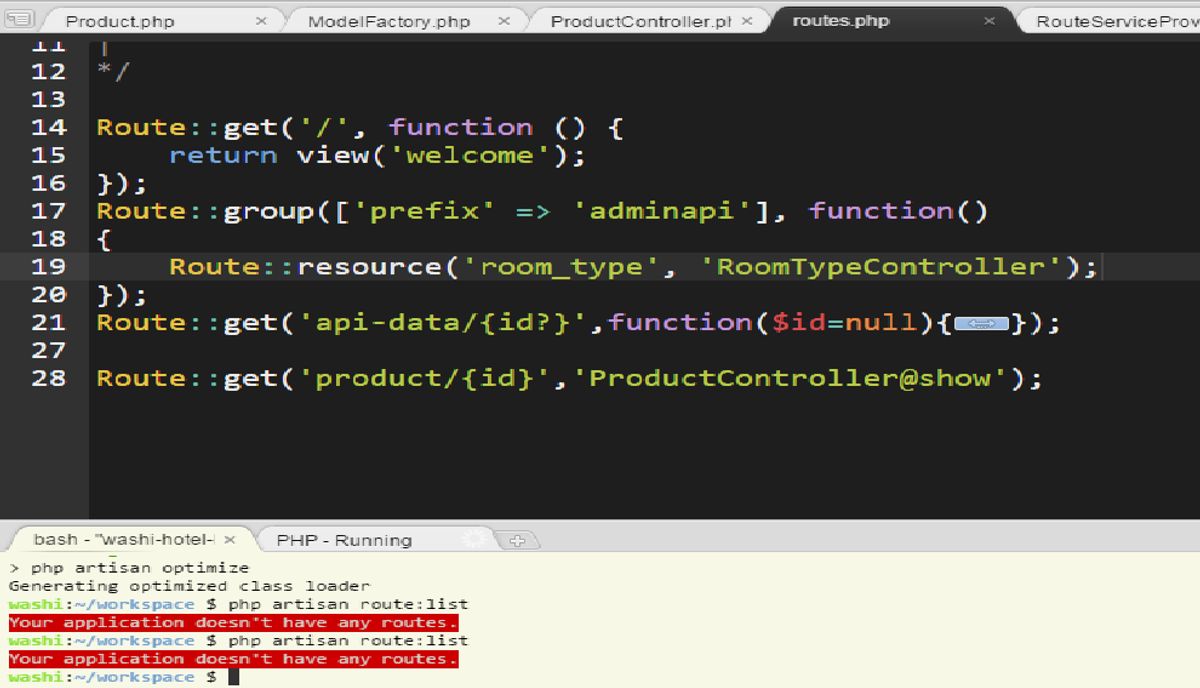
- Back-End: Node.js and Express.js have revolutionized the way we think about server-side JavaScript, enabling full-stack development with a single language.
- Build Tools: Webpack and other bundlers streamline the development process by automating tasks and optimizing code.
- Databases: Integration with databases like Postgres and MySQL is facilitated through ORMs and custom APIs.
Embracing JavaScript across the stack not only simplifies the development process but also opens up a world of possibilities for innovation and performance optimization.
The versatility of JavaScript is further exemplified by its compatibility with various deployment environments, including Linux servers, Docker containers, and cloud platforms like AWS. This flexibility ensures that JavaScript applications can be scaled and maintained with ease, meeting the demands of modern web development. As we continue to push the boundaries of what's possible on the web, JavaScript remains at the heart of this evolution, proving to be an indispensable asset for developers around the globe.
Node.js and Express: Facilitating Full-Stack JavaScript Development
In the realm of Full-Stack Development Insights, Node.js and Express stand out as a formidable duo, streamlining the journey from concept to production. Express.js, a minimalistic and server-side rendered framework, has been a cornerstone in Node.js development for over a decade, offering a mature and stable environment for developers.
Express.js simplifies the creation of web applications by providing a suite of features that are both powerful and elegant. With support for the MVC pattern, middleware, routing, and over 14 template engines, it's no wonder that Express.js is often the first choice for Node.js developers. The framework's ability to add a thin layer of essential web application features, without overshadowing Node.js's inherent capabilities, is a testament to its design philosophy.
The beauty of Express.js lies in its simplicity and performance, enabling developers to craft fast and efficient server-side applications with ease.
However, it's not without its challenges. Newcomers may find the concept of middleware daunting, and the development process can sometimes feel less than straightforward. Despite these hurdles, the benefits of using Express.js in full-stack development are undeniable.
| Rank | Backend Framework | Notable Feature |
|---|---|---|
| 1 | Express.js | Middleware |
| 2 | Next.js | Image Optimization |
| 3 | Django | Robust Security |
As we continue to witness the AI-driven analytics revolutionize business landscapes, integrating such technologies with Express.js can lead to smarter choices and growth acceleration. Overcoming the challenges in big data integration is key to harnessing the full potential of AI in conjunction with Express.js. Embrace the insights and elevate your web development prowess to new heights.
The Role of Backend Frameworks in API Development and Integration
In the intricate dance of web development, Back-End Development Advances have become the linchpin for creating robust and scalable web applications. The role of backend frameworks in API development and integration cannot be overstated. They serve as the backbone, enabling seamless communication between the client-side and server-side of web applications.
Backend frameworks offer a variety of tools and libraries that simplify the creation of APIs, which are essential for professional API integration services. These services, particularly for AI, are tailored to unique needs and often start at competitive rates, such as $175. Frameworks facilitate AI integration in decision processes, emphasizing seamless integration with existing systems through APIs and microservices.
The choice of the right backend framework can be a considerable advantage in creating secure, scalable, and high-performing backend architectures.
The following table highlights some of the best backend frameworks for 2024, each with its own strengths in facilitating API development:
| Rank | Framework | Notable Feature |
|---|---|---|
| 1 | Express.js | Robust middleware system |
| 2 | Django | Comprehensive ORM |
| 3 | Laravel | Elegant syntax & MVC support |
| 4 | Spring | Enterprise-level capabilities |
| 5 | Phoenix | Real-time interaction support |
As developers, we must stay abreast of these advancements to ensure that our applications meet the highest standards of performance and security. The integration of backend frameworks with front-end technologies is a testament to the dynamic nature of web development, where continuous learning and adaptation are paramount.
The Emergence of New Paradigms: Svelte, Gatsby, and the Future of Web Development
Svelte: Simplifying Interactive Web Page Development
In the ever-evolving landscape of web development, Svelte stands out as a revolutionary tool that redefines efficiency. Unlike traditional frameworks that rely on a virtual DOM, Svelte brings a fresh approach by eliminating this layer, resulting in faster updates and rendering. Its unique compilation step optimizes the application at build time, ensuring that only the necessary code is sent to the browser.
Key features of Svelte include:
- No virtual DOM, direct DOM updates
- Reactive programming built into the language
- Simplified coding with Typescript
- Python-like design philosophy
- Comprehensive tutorials with real-time interfaces
- Optimized code compilation for minimal runtime overhead
Svelte's philosophy is to write less code, while its compiler does the heavy lifting. This leads to more readable and maintainable codebases, which are essential for long-term project success.
The framework's commitment to minimalism extends to its API design, offering a blend of robust features and aesthetic syntax. For developers, this translates into a development experience that is not only productive but also enjoyable. As AI-driven automation and emerging technologies continue to shape the industry, Svelte's strategic implementation of reactivity and compilation techniques positions it at the forefront of SaaS innovation. Embrace the simplicity and power of Svelte to propel your web projects to new heights.
Gatsby: Creating Superfast Web Experiences with React
In the quest for superfast web experiences, Gatsby emerges as a powerful ally. This framework, leveraging the strengths of React, is ideal for crafting blogs, landing pages, and e-commerce sites that not only dazzle users with speed but also with a fully customized user experience. Gatsby's embrace of the PRPL pattern, a brainchild of Google, ensures that your site's performance is second to none.
With Gatsby, security concerns take a backseat, thanks to its static site generation that eschews direct database connections or handling sensitive information.
Here's why developers are choosing Gatsby for their projects:
- Utilizes React's rich feature set for bespoke user experiences.
- Adheres to the PRPL architectural pattern for enhanced site performance.
- Eliminates security worries with static site generation.
By integrating Gatsby into your development workflow, you join the ranks of those who prioritize performance, security, and user engagement. The Gatsby GitHub repository is a testament to the vibrant community and ongoing enhancements that keep it at the forefront of modern web development.
As we navigate the ever-evolving landscape of web technologies, remember that the AI-driven analytics revolutionize decision-making in business. By harnessing ethical AI, we can predict trends, enhance efficiency, and bridge the gap between enterprises of all sizes. Gatsby is more than a framework; it's a step towards a faster, more efficient web that levels the playing field for businesses worldwide.
Evaluating the Future Trajectory of Web Development Frameworks
As we stand on the brink of next-generation web development, it's crucial to recognize the forces shaping our digital landscape. The web development future outlook is not just a matter of speculation; it's a vibrant canvas of cutting-edge web development trends that are redefining how we interact with the web. Innovative web technologies are emerging at a breakneck pace, promising to elevate user experiences and streamline development processes.
- Cutting-Edge Web Development Trends: The rise of AI-driven design, voice interfaces, and immersive AR/VR experiences.
- Innovative Web Technologies: Adoption of serverless architectures and edge computing for enhanced performance.
- Progressive Web App Development: Combining the best of web and mobile apps for seamless offline functionality.
- Emerging Web Development Tools: Tools that offer real-time collaboration and advanced debugging capabilities.
The relentless pursuit of efficiency and user engagement is driving the evolution of modern web application frameworks. As developers, we must adapt to these changes to stay relevant and competitive.
The web development industry disruptions are not just altering the technical landscape but also the economic and social fabric of the industry. From the rise of progressive web app development to the integration of emerging web development tools, the trajectory is clear: adaptability, performance, and user-centric design are paramount. Let's embrace these changes and harness the potential of modern web application frameworks to create web experiences that are not only functional but also intuitive and delightful.
Are you ready to be at the forefront of this transformation? Dive into the world of Fiverr Pro, where you can explore a plethora of professional services, from graphics and programming to digital marketing. Engage with guides, blogs, and a vibrant community that can help you navigate the ever-evolving web development landscape. [Explore Fiverr Pro](https://www.fiverr.com/pro) today and be part of the change.
Maintaining and Scaling Web Applications in a Modern Development Environment
Strategies for Adapting Existing Code for Browser Compatibility
In the ever-evolving landscape of web development, ensuring that your application provides a consistent experience across all browsers is not just a necessity; it's a cornerstone of Web User Experience Innovations. Adapting existing code for browser compatibility is a multifaceted challenge that involves a keen understanding of both legacy and modern web technologies.
To achieve seamless browser compatibility, developers must engage in a meticulous process of code review and refinement. This includes identifying and resolving inconsistencies, integrating third-party APIs thoughtfully, and optimizing performance to meet the expectations of today's users.
Here's a succinct guide to the key steps involved:
- Review: Conduct a thorough audit of your codebase to pinpoint compatibility issues.
- Refine: Update outdated HTML/CSS/JS to align with current web standards.
- Test: Implement automated tests to ensure changes don't break existing functionality.
- Optimize: Monitor user behavior to enhance site performance and user satisfaction.
Remember, the goal is to not only make your brand stand out but to also create an engaging user experience that drives revenue. Whether you're working with Angular applications or integrating new JavaScript libraries, the attention to detail in this process can make or break the success of your project. We invite you to request a free quote and discover how we can elevate your web presence to the next level.
Automated Testing and Continuous Integration in Web Development
In the realm of web development, the evolution of automation tools has been nothing short of revolutionary. From the rudimentary scripts of yesteryear to today's sophisticated AI-driven systems, developers now have at their disposal tools that significantly enhance both speed and reliability. The integration of AI into these processes is not just a trend; it's a paradigm shift that revolutionizes development, improving efficiency and quality across the board.
The adoption of automated testing and continuous integration practices is crucial for maintaining a high standard of code. These methodologies ensure that new code contributions are verified, that they do not break existing functionality, and that the product remains in a deployable state at all times.
Embracing these practices is not merely about keeping up with technological advancements; it's about committing to a culture of excellence. By integrating rigorous testing and deployment routines, teams can catch issues early, reduce bugs in production, and deliver a more stable and reliable user experience.
To truly understand the impact, consider the following benefits:
- Immediate feedback on code changes
- Reduced manual testing time
- Higher code quality and fewer bugs
- Streamlined collaboration and increased productivity
As we continue to push the boundaries of what's possible in web development, let's not forget the foundational practices that safeguard our progress. Automated testing and continuous integration are not just tools; they are the bedrock of modern development that enable us to build with confidence and scale with ease.
The Importance of Maintenance and Upgrades in Web Application Lifecycles
In the ever-evolving landscape of web development, maintenance and upgrades are not just routine tasks; they are pivotal for the longevity and relevance of web applications. As businesses leverage AI tools like OpenAI Feather and SIU Business GPT Fleet for scaling and customizing SaaS, they also recognize the necessity of regular updates to stay ahead in the AI era.
- Adapting existing code for browser compatibility is crucial to ensure seamless user experiences across different devices and platforms.
- Automated testing is integral to identifying and resolving issues before they impact users.
- Integrating third-party APIs enhances functionality and keeps the application in sync with modern services.
- Maintenance involves not just bug fixes but also preparing for cloud migrations, system integrations, and vulnerability remediations.
The key to a successful web application is not just in its launch but in its ability to evolve with the technological landscape and user needs.
By investing in these areas, developers can create a robust foundation for web applications that not only perform well but also adapt to future challenges and opportunities. Remember, a well-maintained application is a testament to your commitment to quality and user satisfaction. Engage with your development team, prioritize these aspects, and watch your web application thrive in the dynamic world of modern web development.
Conclusion
In the intricate landscape of web development, technologies such as HTML, React JS, Angular, Laravel, and PHP stand as pivotal tools that shape the way we create and interact with the web. Each technology brings its unique strengths to the table, from the foundational markup of HTML to the dynamic capabilities of JavaScript frameworks and the robust backend solutions provided by PHP and Laravel. As we have explored, the choice of technology can significantly influence the development process, affecting scalability, maintainability, and the overall user experience. The trends and best practices discussed herein underscore the importance of selecting the right tools for the job, ensuring that developers can meet diverse needs while crafting efficient, modern, and adaptable web applications. As the web continues to evolve, so too will the tools we use to weave its ever-expanding fabric, requiring a keen understanding of each technology's features and potential to stay at the forefront of innovation.
Frequently Asked Questions
What makes HTML a foundational technology in web development?
HTML is the standard markup language for creating web pages and applications. It provides the structure and content of a website, allowing browsers to display text, images, and other elements in a coherent format. Its ubiquitous nature and ease of use make it essential for any web development project.
How do React JS and Angular differ in their approach to front-end development?
React JS is a JavaScript library for building user interfaces, emphasizing a virtual DOM for performance and component-based architecture. Angular is a full-fledged MVC framework that provides a more opinionated structure, including two-way data binding and a comprehensive set of features out of the box.
What are the benefits of using Laravel for server-side development?
Laravel is a PHP framework with elegant syntax and provides robust features like an ORM, MVC architecture, and a templating engine. These features streamline the development process, enhance security, and simplify tasks like authentication, routing, sessions, and caching.
How does integrating Laravel with front-end technologies enhance web applications?
Integrating Laravel with front-end technologies like Vue.js or React allows developers to create dynamic, responsive, and efficient applications. Laravel's robust back-end capabilities complement the interactive and user-friendly interfaces provided by modern front-end frameworks.
What role does JavaScript play across the full stack of web development?
JavaScript is a versatile language that operates both on the client-side and server-side, enabling developers to build full-stack applications with a single language. With frameworks like Node.js for the backend and libraries like React for the frontend, JavaScript provides a cohesive development experience.
How important is maintenance and scalability in the lifecycle of a web application?
Maintenance and scalability are crucial for the long-term success of a web application. Regular updates, security patches, and performance optimizations ensure the app remains reliable and efficient. Scalability allows the app to handle increased load and functionality as it grows.


Comments
Post a Comment